Showing posts with label Expo 2010 Shanghai. Show all posts

Sunday, October 31, 2010

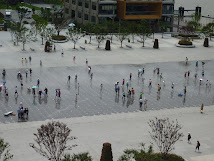
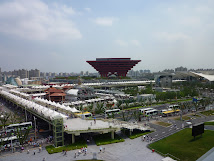
Panoramic View at Expo Culture Center in Shanghai

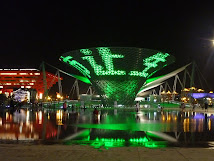
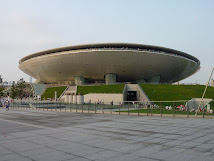
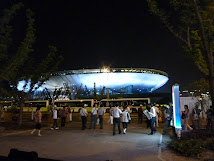
The Expo Culture Center
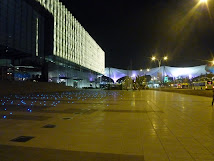
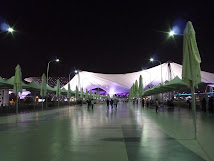
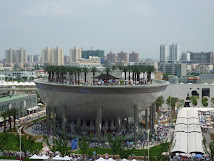
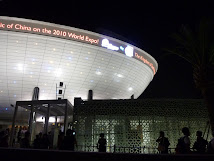
The Expo Culture Center is an essential building of Expo 2010 in Shanghai, China. It is the place where the Expo opening and closing ceremonies were held. Situated by the side of the Huangpu River, the Expo Culture Center is shaped like a giant flying saucer. It is particularly beautiful at night as the lights sparkle like thousands of diamonds. During the period of the Expo 2010 from May 1 to October 31, 2010, there were hundreds of free-of-charge cultural performances and entertaining programs taken place in the theaters and cinemas of the Center. Inside the Center, there are shopping mail, ice rink, and restaurants. On the third floor, there is a Firework Observation Deck where people watched the firework over the river during the Expo opening ceremony. On the sixth floor, there is a 360 degree balcony. People can walk along the balcony to make a circle round about the Center. This is the best place where people take the view of the Expo site, including China Pavilion, Taiwan Pavilion, Expo Axis, Japan Pavilion, Korea Pavilion, Saudi Arabia Pavilion, and India Pavilion. This is also the best place to take a good view of the Huangpu River and far across the river to the Puxi section of the Expo.

The Expo Culture Center is a permanent project of Expo 2010. While many building will be demolished after the closure of the Expo, the Expo Culture Center will remain to serve for important events and entertaining activities to citizens. It will surely become a new landmark of Shanghai. 

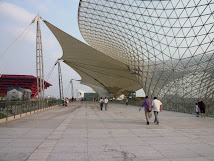
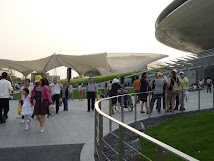
On the balcony of the Expo Culture Center

Walking on the balcony of the Expo Culture Center, people can take a panoramic view of the Expo site.

Monday, October 25, 2010

Czech Pavilion at Expo 2010 Shanghai

Czech Pavilion
The Czech Pavilion has given us an amazing surprise not just because of its attractive exhibitions but also its hard work for the Shanghai Expo 2010. While most pavilions are closing their doors at 09:00pm, the Czech Pavilion still welcomes new visitors at 09:30pm. The Czech Pavilion is a rectangular building. On the walls of the pavilion, there are a large number of ice hockey pucks patterned in the map of the Old Town of Prague, the capital of Czech. Ice hockey is the national sport of Czech. The entrance of the pavilion is rather pretty. It looks rather like a giant spiraling ribbon. To enter the pavilion, visitors have to get through the ribbon coils.  The theme of the Czech Pavilion is "Fruit of Civilization". In the exhibition hall, there stands a brass statue. In the Czech tradition, people believe that they will receive good luck if they touch a certain part of the statue. It is the first time that people could make a wish with the statue out of Czech. A giant kaleidoscope, named as the Czech Pearl, is shown with various beautiful patterns. Scientific technologies achieved by Czech include nanofiber, contact lens, and crystals. Other than visual displays, the pavilion lets visitor participate in the interactive programs. Sitting on a small airplane, people can see themselves appear on the TV screen and fly over the Czech cities. In another section, people can generate electricity by rubbing the thermal paper. The quicker a person rubs, the brighter the light will be.


Czech Pearl


Flying on a simulator airplane in the Czech Pavilion

Saturday, October 23, 2010

Artistic Displays at Italy Pavilion in Shanghai Expo 2010

Italy Pavilion
Strolling in the Italy Pavilion at Expo 2010 Shanghai, visitors will develop a feeling like taking a journey in Italy. Stepping into the pavilion, people will see a model of the ancient architecture in Italian style. Passing through the architecture under an arch, individuals come up to a very spacious exhibition hall. Most of the exhibitions focus on visual presentations. There are luxury cars and motor bikes. There are Italian artworks, furniture, paintings, antiques, fashion design, graphic design, volumetric and motion design. There is a Pinocchio Workshop demonstrating how a long-nosed wooden puppet, Pinocchio, is made by a craftsman. Round the corner, six Sicilian altar frontals are hung on the wall. These fabric embroidery hangings with colorful silk yarns and precious materials are used in churches to cover the front of altars. Going to another end of the exhibition hall, there is a giant high-heeled shoe. A number of stylish and fashionable Italian shoes are attached to it.  
On the second floor of the pavilion, there is a very nice Italian restaurant and a cafe. In the gallery named as "Italy of the Cities", movies introducing Italian cities, lifestyle and culture are projected on both sides of the passages. Next to the "Italy of the Cities", there is a section introducing Toscana which is a region in central Italy. Florence is its regional capital. The displays in the Italy Pavilion are very artistic. Various artistic patterns are formed by millions of Italian pastas in different shapes. Famous products also include Italian wines. The last part of the exhibitions is to bring up the message of World Expo 2015 which will be held in Milan of Italy. 

Inside Italy Pavilion


Italy of the Cities

Wednesday, October 20, 2010

Little Mermaid at Denmark Pavilion Expo 2010

Denmark Pavilion
Both Denmark and China are nations of bikes. The Denmark Pavilion at Expo 2010 Shanghai advocates the benefit of bicycles as the energy free transport for cities. Over a hundred bicycles are available for visitors to experience the Denmark city life with zero-carbon transport. The snow-white Denmark Pavilion consists of two circular ramps spiraling around a beautiful pool in an open area. There are pedestrian and bicycle tracks on the ramps. At the center of the pavilion, the little Mermaid sculpture sits on a rock in the middle of the pool.  Throughout the journey walking up to the top of the pavilion, we saw the displays of the famous Denmark products such as beer and toy LEGO. There were not much to see. After we had reached the top of the pavilion which was an open area, we continued our walkway and eventually back to the ground level. The Denmark Pavilion looks great. It has won a prestige award from an American-based exhibitor magazine.  
The main focus of the Denmark Pavilion is the Little Mermaid. The first time I saw the Little Mermaid statue was during my visit to Denmark a few years ago. Sitting on a rock by the seashore at the downtown of Copenhagen, the little mermaid appeared to be smaller in size than I expected. During the period from May 1 to October 31, 2010, people are not able to see the Little Mermaid in Copenhagen because she has been moved to Shanghai for display in the Denmark Pavilion at Expo 2010.

The Little Mermaid at Expo 2010 Shanghai

Wednesday, October 6, 2010

Japan Pavilion vs Japanese Industry Pavilion at Expo 2010 Shanghai

Japan Pavilion
Many people expect to see some innovative exhibits with high-tech settings inside the Japan Pavilion at Expo 2010 Shanghai. That is why there are always tons of people lining up in front of the pavilion. Located at Zone A of the Pudong section not too far away from Entrance Gate 4, the Japan Pavilion features like a purple silkworm. Having a semi-circular structure outlook, the pavilion is covered by lightweight membrane materials with the erection of a few Eco Tubes on its top. Eco-friendly environmental technologies including the utilization of solar power are integrated into the building design. Rainwater can be stored for use and air can be circulated to reduce environmental burden. As a start touring around the pavilion, we stepped onto an escalator inside a tube. We then watched the displays of the Japanese landscapes in four seasons. The following exhibits were relevant to modern advanced technologies. There was a new model of battery-rechargeable car. There was a display of the Eco heat pump which could boil water efficiently with the use of minimal power to gather heat from the air warmed by the sun. There was a magic floor map. Stomping heavily on the map could produce electricity to turn on the light. The heavier we stomped, the more electricity we could generate. The Japanese had manufactured a lightweight vehicle for a single person use. The vehicle took less space than the conventional cars and allowed more mobility and convenience. Many people are fancy with the electronic music played by a robot violinist. To me, the robot performance is nothing new. Robot technologies have already existed for 30 years. I recalled that I watched a robot draw the face pictures for the visitors in World Expo 1985 at Tsukuba of Japan.
Japanese Industry Pavilion
It takes 2 to 4 hours to wait for the admission to the Japan National Pavilion. If people expect similar displays in the Japanese Industry Pavilion located at Zone D in Expo Puxi, they will be wrong. During our daytime visit to Zone D, we saw a very long waiting queue at the Japanese Industry Pavilion. Instead of waiting for 2 hours, we left the site. When we returned in the evening at the time approaching pavilion closure, the queue was much shorter. After waiting for half an hour, we got into the pavilion but were then disappointed with the shows.  There were eight movies introducing the Japanese products. One of them was a 3-D movie, and one of the products was made from soy beams. The movies acted rather like advertisement. They were so boring that we left the pavilion after we had finished watching four. 

 
The robot violinist at the Japan Pavilion

Thursday, September 30, 2010

A Green Idea at Alsace Case Pavilion of France in Expo 2010 Shanghai

Alsace Case Pavilion
City Pavilions display best urban practices at World Expo 2010 in Shanghai. Many of them have adopted an idea to promote low-carbon lifestyle. The Alsace Case Pavilion is one of the three French regions participating independently in Expo 2010 (The other two regions are Paris and Rhone-Alpes). Located at the Urban Best Practices Area (UBPA) in the Expo Puxi section, the Alsace Case Pavilion demonstrates a construction model in energy saving and environmental protection. The model applies a unique way using solar and water power to generate domestic electricity for cooling and heating systems in summer and winter respectively. The power is generated using the capsule-type solar water curtain wall technology. On the frontal part of the pavilion building, there is a water-skin solar powered wall. Next to the water-skin wall, there is an amazing green wall filled with living plants.

The water-skin wall consists of two layers of glass panels. Trapped air in the wall layers is pumped up to the roof of the building and circulated back by the solar power which is channeled through photovoltaic panels. The external window-type glass panes automatically open and close in the adjustment to the sunlight intensity and outdoor temperature. Such adjustment helps saving energy by providing sunshades and allowing air circulation into the wall layers. During the summer time, the outer glass panes open and water keeps pouring down on the inner glass panes to cool down the indoor temperature.

This interesting system is just like our skin that can breathe to maintain body temperature at a stable level.


The green building Alsace Case Pavilion

Saturday, September 25, 2010

Spain Pavilion at Expo 2010 Shanghai

Spain Pavilion
The Spain Pavilion is one of the great attractions in Shanghai Expo 2010. Occupying an area around 6,000 square meters in Zone C of the Pudong section, the pavilion shows its creative architectural design which has won the prestigious international architecture award of the Royal Institute of British Architects (RIBA). With the applications of natural materials and advanced technologies, the pavilion features like a hand-weaved rattan basket in beautiful wave shape. That is why the pavilion is also named as the Spanish Basket. The Basket, in fact, is supported by a steel skeleton hidden in the coverage of thousands of wicker panels. The design allows a large amount of sunlight peeping into the indoor areas. Visitors will recognize the benefit of the design particularly at the final exhibition hall. There are three sections in the exhibitions to interpret the theme of the pavilion, "From the city of our parents to the City of Our Children".
The giant baby
The first part of the exhibitions is the most entertaining program. Visitors enter a dark hall which looks rather like a big cave tunnel. Movies are projected on the walls of the cave to produce a stunning effect, including stormy ocean, thunder and lightning, galloping horses, bull running festival, basketball and football matches. In between the movies, there is a staged Flamenco dancing performance. The dancing girl lies down in the dark for a rest during the movie presentation. If visitors have walked fast during this period, they may have missed the live performance. The second section of the exhibitions presents the Spanish history, culture, and urban development in the recent 60 years. Videos are projected on multiple screens hanging around the exhibition hall in different directions. In the final section, an electronic giant baby is displayed in sitting position. The robotic baby is very sweet and cute. He can breathe and turn his head. When he is blinking his eyes, soap bubbles fall down from the top of the exhibition hall. Many child visitors enjoy very much of this program.  
During the period of the Shanghai World Expo 2010, Spain won the football world cup for the first time in the history. Spain made a breakthrough 1-0 victory over the Netherlands in the World Cup final at South Africa on July 12, 2010. The joy of the triumph also extended to Shanghai. A banner in Chinese language "Everybody is the champion" was hoisted at the Spain Pavilion in the following morning.
 

Flamenco dancing performance in the Spain Pavilion


Spain - "From the City of Our Parents"


Spain Pavilion - "To the City of Our Children"
 

Friday, September 17, 2010

The Madrid Best Practices Case in Expo 2010 Shanghai

In the Madrid Case Pavilion
Madrid, the capital of Spain, is one of the greenish cities in the world. Owning a case pavilion at the Urban Best Practices Area (UBPA) in Expo 2010 Shanghai, Madrid demonstrates an environmental friendly social housing project as developed by its municipal government for the low-income citizens. There are two parts in the exhibitions, namely the Bamboo House and Air Tree. The Bamboo House mainly serves for displays and exhibitions. The Air Tree provides visitors with a comfortable open area for a rest. The exhibition pathway begins at the top floor of the Bamboo House, and it is connected with an escalator  from the ground level where visitors are waiting for admissions. There are separated entrances leading to the Spanish restaurant and souvenir shop. The entire building duplicates the design of the Madrid public housing with the application of ecological materials and installation of renewable energy resources. The outer layer of the House is encrusted with bamboo bark for the purpose of temperature control as well as noise insulation.

Bamboo House (L), Air Tree (R)
The Air Tree, which is adjacent to the Bamboo House, is a cylindrical structure covered all around with large movable window shades. During the day, shades are open to facilitate natural ventilation in the Air Tree. When shades are closed, they become the double-side projection screens for movies and light show performances in the evening. Wind wheels are equipped on the top of the structure, and there is a giant fan turning to ventilate the area under the Tree. Visitors enjoy listening to the lovely music while resting in a refreshing area. The Air Tree can also be served as a platform for a mini concert.

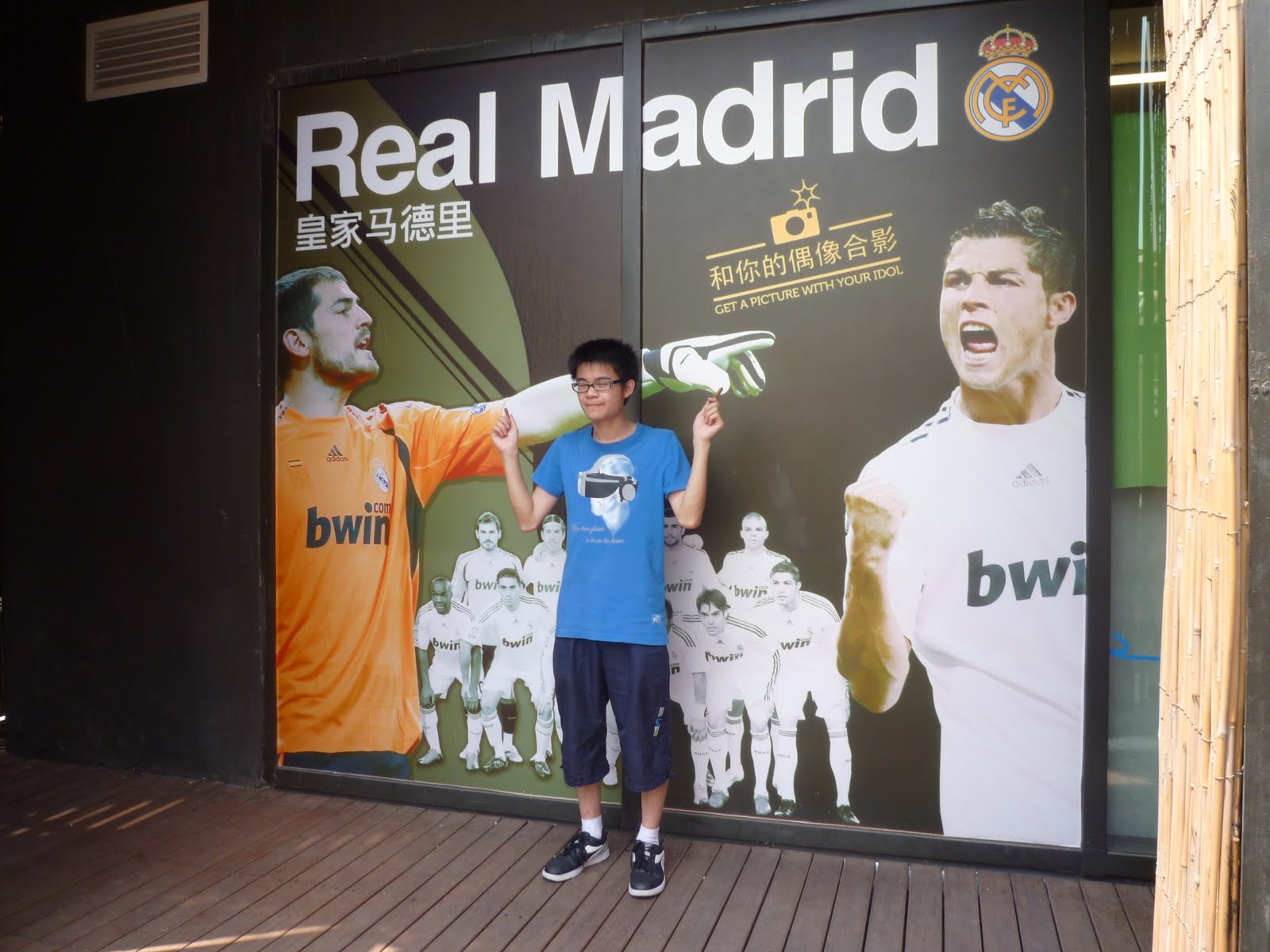
If you visit the Madrid Case Pavilion for the purpose of collecting a stamp, the Pavilion will not make you feel disappointed. A full collection of the stamps from the Madrid, Bilbao, and Barcelona Case Pavilions for your Expo passport will give you the priority to enter the Spain Pavilion through the fast access channel. If you are a fans of the Real Madrid Football Club, you will certainly get something that makes you feel excited.


A mini concert under the Air Tree at the Madrid Case Pavilion UBPA

Monday, August 2, 2010

Flying in the Latvia Pavilion at Expo 2010 Shanghai

Latvia Pavilion night view
Hey! Can you fly? Yes, you may have the chance to fly in the Latvia Pavilion at Expo 2010 Shanghai.Through the glass wall of the vertical wind tunnel of the Latvia Pavilion, I saw two men fly freely and happily (see video below). They looked rather like the astronauts flying, springing, tumbling, looping, and skydiving in the air. It is amazing and fantastic. This is the Technology of Happiness designed in Latvia by Aerodium. It is specifically developed for the Shanghai Expo 2010 with the application of advanced technology. The show of the Technology of Happiness lasts 30 minutes, and the capacity for audience is about 400 persons.
The outlook of the Latvia Pavilion is unique and pretty. The external wall is covered with 100,000 pieces of transparent plastic plates with the size of 15 square centimeters each. When the breeze is blowing, the plates flutter and shimmer. The majority of the plastic plates are in silver color. In between, there are red, yellow, orange, blue, and green plates to symbolize the beautiful nature such as land, wind, sky, forest, and ocean. At the entrance of the pavilion, there is a spiral staircase leading to the top floor. This represents human's continuous effort in moving life to a better level.
Entrance to the Latvia Pavilion
There are three levels in the pavilion. The first floor is a Latvia souvenir shop and cafe. When I was sitting in the cafe to finish my lunch, I on and off heard some vibrating noises coming from the above. It sounded like an airplane engine. At that time, I knew nothing about the pavilion. What was inside? After the pavilion visit, I recognized that it was the engine from the base of the wind tunnel. The second floor of the pavilion is mainly a platform on where the lucky visitors prepare themselves for flying. Here they receive instructions and training, sign the required legal forms, change into Aerodium outfits, put on helmets, and prepare to go upstairs to the wind tunnel. The third floor of the pavilion is the exhibition hall in where the show is conducted. The vertical wind tunnel which is surrounded by circular glass walls stands at the center of the hall. There is a glass door. By the side of the door, there is a control room with machines and buttons.  But we didn't see anybody there throughout the period of the show. In the outer area of the tunnel, there is an one-meter high barrier to avoid visitors getting too close to the glass wall. Outside the glass wall, there is staircase going down to the lower level. This also acts as the entrance from where the performers come up to the stage. On the floor of the tunnel, there is a large cushion for preventions of injuries.

Top of the vertical wind tunnel
Apart from the vertical wind tunnel, there are interactive computers hanging on the walls of the exhibition hall. This allows visitor participation. Visitors can learn something about Latvia from the slide shows. After watching the Technology of Happiness, I continued staying in the hall. Nobody asked me to leave the pavilion. Therefore, I watched the Technology of Happiness again. I took lots of videos. However, the reflected glare, as caused by the afternoon sunshine, on the glass wall had led to a mild defect on the videos.
The Latvia Pavilion is rather small, but its design is unique. I spent half an half in queuing for the Latvia Pavilion during the afternoon peak hours, but I obtained more than I had expected. Not many people would have noticed that such a small pavilion of a small country would give you a stunning reward. After the visit to the Latvia Pavilion, I am interested to learn more about this country which was out of my knowledge. The Latvia Pavilion has successfully built up a good image for its country. I would like to take this opportunity to express our appreciations to the Latvia Pavilion. The Technology of Happiness is brilliant and wonderful. Spectators, however, hadn't clapped their hands because everybody was holding a camera or video recorder in hands. Instead, there were excited voices of joy.

Latvia vertical wind tunnel
How can people experience the Technology of Happiness?
Go to the third floor of the Latvia Pavilion. Fill out some basic personal data by logging onto the interactive computer. Answer some questions about Latvia. You will immediately find out whether or not you have been chosen to try out the Technology of Happiness. You need a little bit of luck to have the chance to fly in the vertical wind tunnel. I didn't see any visitor participation in the wind tunnel flying during my visit to the Latvia Pavilion. I believe that there are time zone limits for visitor experiences. Furthermore, I don't know whether or not the activity will be suspended due to overcrowd visits during summer holiday.

Latvia's Technology of Happiness


Latvia's Technology of Happiness

Saturday, May 22, 2010

Expo 2010 Shanghai

Barrier free channel at Expo Gate 8
There has already been 21 days since the opening of the Expo 2010. The accumulated number of visitors is 4,370,000. There were 320,000 visitors yesterday. This has exceeded those on the first two days of the Expo. Those who are disabled, aged 70, or carrying babies can use priority channels (barrier-free channels) for admissions to the Expo or certain pavilions. Services for wheelchairs or baby prams are available.
Purchase of Subway Day Pass

In addition to various sales points and online sales, admission tickets for the Expo 2010 can be purchased at 10 ticket offices at the Expo entrances. The Expo ticket office at Madang Road Metro Station sells same-day ticket between 8am and 5pm, and evening tickets between 4pm and 8pm. Evening ticket holders can enter the Expo between 5pm and 9pm. Visitors are recommended to hold Metro return tickets or one-day pass so that they can save their time in queuing for tickets when leaving the Expo site. However, if they plan to leave the site after 10pm, it is believed that there will not be too many  people lining up for the purchase of metro tickets.